Inspirational journeys
Follow the stories of academics and their research expeditions
How software-defined vehicles, connected cockpits, AI, OTA updates and automation are creating the next wave of automotive testing careers.

|
|
THE CENTRAL IDEA The vehicle is
becoming a connected software platform. As software content grows, quality
engineering expands from feature checks to continuous, end-to-end validation
across the vehicle, smartphone, cloud and network. |
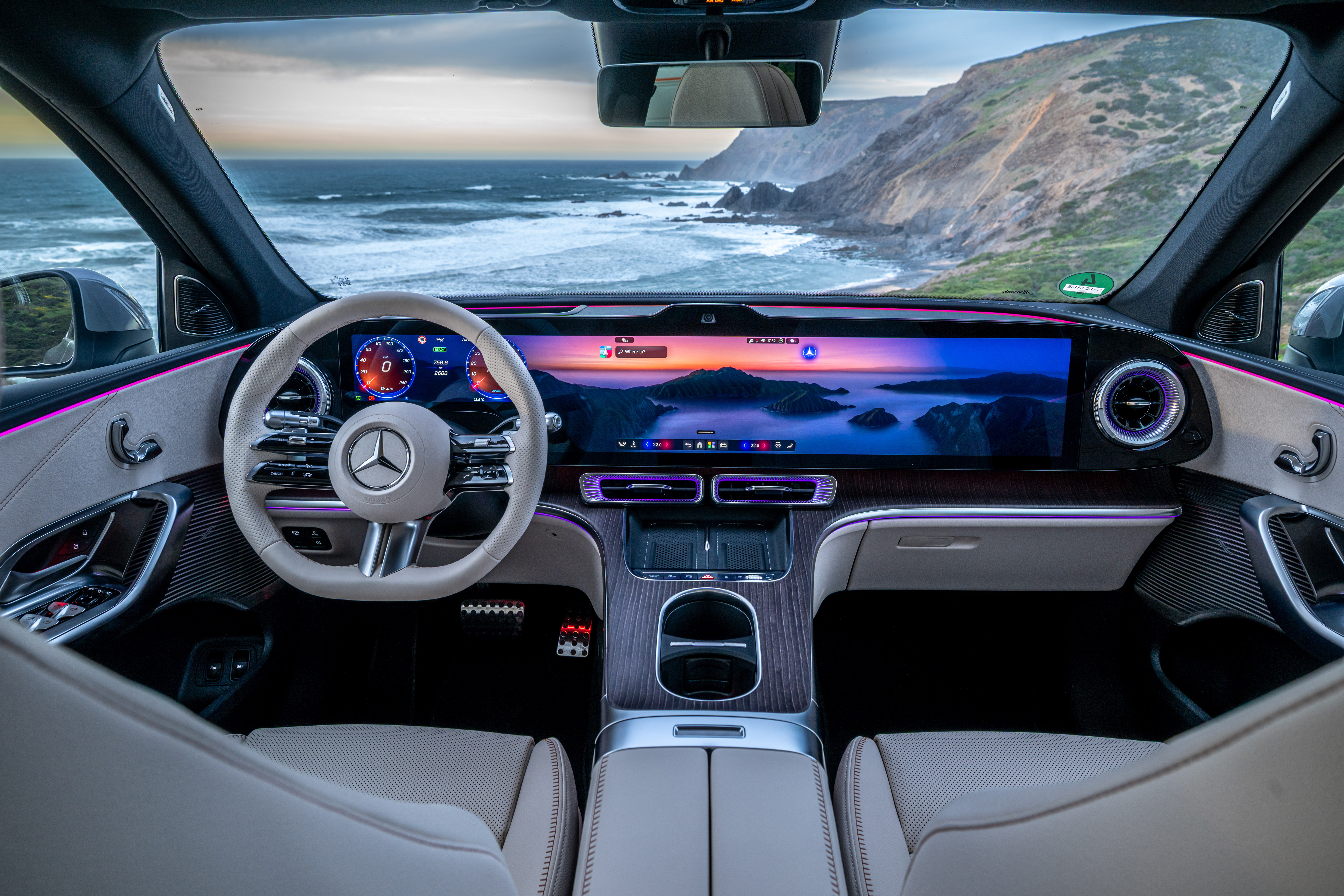
The automobile is becoming a software platform
The automobile industry is going through
one of the largest transformations in its history. Modern vehicles are no
longer only machines powered by engines. They are becoming software-defined,
connected and intelligent platforms that combine entertainment, communication,
navigation, cloud services, driver assistance, smartphones, artificial
intelligence and vehicle systems.
At the center of this transformation is the
automotive infotainment system. Today’s systems support navigation, music,
video, Bluetooth, voice commands, smartphone integration, internet services and
vehicle information. In newer vehicles, infotainment is also closely connected
with digital instrument clusters, telematics, cameras, sensors and other
electronic control units.
|
|
CAREER OPPORTUNITY Between 2027
and 2030, increasingly sophisticated connected-car experiences are expected
to expand the need for professionals who understand both software testing
principles and automotive technologies. |
Why the testing challenge is growing
The modern vehicle combines software,
hardware, connectivity, cloud services, mobile applications, artificial
intelligence, sensors, digital displays and communication networks. Every layer
must work correctly on its own and together with the others.
|
Software-defined
vehicles Functions that
were once fixed in hardware are increasingly shaped by software,
configuration and updates. |
Connected experiences The user
journey can span the vehicle, mobile network, cloud platform, smartphone and
backend services. |
|
Continuous releases OTA updates
create a recurring need for impact analysis, regression testing, recovery
validation and configuration coverage. |
Complex user
environments Devices,
operating-system versions, accents, networks, vehicle variants and real-world
interruptions multiply test conditions. |
The Infotainment Testing Ecosystem
Infotainment testing is not limited to
checking touchscreen buttons. It validates a complete digital ecosystem that
stretches beyond the dashboard.

|
Vehicle cockpit Central
display, instrument cluster, head-up display, steering-wheel controls,
cameras and vehicle settings. |
Smartphone
integration Android Auto,
Apple CarPlay, Bluetooth, Wi-Fi, USB, calls, contacts, messages and audio
streaming. |
|
Cloud and network Navigation
services, traffic, streaming, user profiles, telematics and backend
communication. |
Engineering
environment Diagnostic
tools, CAN analysis, log capture, automated benches, simulation and vehicle
testing. |
|
|
END-TO-END QUALITY LENS A tester must
ask not only “Does the feature work?” but also “How does it behave when the
phone disconnects, connectivity is lost, another feature interrupts it, the
vehicle restarts or an update fails?” |
13 GROWTH DRIVERS
Why Automotive Infotainment Testing Will Grow
1. Software-defined vehicles
Software now controls or supports
infotainment, navigation, digital dashboards, vehicle settings, voice
assistants, multimedia, connected services, telematics, remote functions and
OTA updates.
2. Android Automotive OS
Native in-vehicle applications introduce
testing needs for UI, audio, Bluetooth, navigation, voice, performance,
permissions, application lifecycle, stability and vehicle integration.
3. Android Auto and Apple CarPlay
Compatibility must cover multiple
smartphones, OS versions, wired and wireless connections, interruptions,
reconnection, concurrent Bluetooth usage and restart behavior.
4. Connected cars
Validation increasingly spans the chain:
Vehicle → Mobile Network → Cloud → Mobile App → User.
5. Artificial intelligence
Voice assistants and natural-language
experiences require testing for accents, noise, interpretation, response
accuracy, latency, context, failures and privacy-related behavior.
6. Digital cockpits
Navigation, alerts and media information
may appear across central displays, clusters, passenger screens and head-up
displays. Content must remain correct, consistent, timely and responsive.
7. OTA software updates
Every update requires change-impact
analysis, variant coverage, regression, data preservation, stability checks and
failed-update recovery.
8. Multi-layer system validation
Professional testing includes functional,
UI, multimedia, Bluetooth, navigation, smartphone integration, integration,
system and regression testing.
9. CAN, UDS and diagnostics
Knowledge of vehicle signals, ECU
communication, diagnostic services and DTCs distinguishes automotive testers
from conventional application testers.
10. Linux-based platforms
Linux commands, logs, services, processes,
file systems and network interfaces help testers isolate issues and work
effectively with target systems.
11. DLT and debugging tools
Capturing, filtering and correlating logs
with observed failures makes defect reports more actionable.
12. Test automation
Automation supports repeatable regression,
UI, API, connectivity, data validation and monitoring, while physical devices
and real-world behavior still require manual and vehicle testing.
13. Automotive cybersecurity
Connected systems increase the importance
of secure communication, authentication, access control, data protection,
secure updates and vulnerability awareness.
What Infotainment Testers Actually Test
|
Functional testing Feature
behavior against requirements and expected user workflows. |
UI and HMI testing Screens,
buttons, menus, layouts, icons, themes, transitions and driver interaction. |
|
Multimedia testing Audio, video,
file formats, metadata, playback controls and interruption handling. |
Bluetooth testing Pairing,
reconnection, calls, audio streaming, contacts, messages, profiles and
multiple devices. |
|
Navigation testing Positioning,
routes, map data, destination search, recalculation, traffic and voice
guidance. |
Phone projection Android Auto
and Apple CarPlay across devices, OS versions and connection modes. |
|
System and
integration testing Interactions
among the head unit, cluster, telematics, controls, cameras and other ECUs. |
Regression and
stability Protection of
existing functions across releases, configurations, extended operation and
repeated cycles. |
A simple feature can create hundreds of scenarios
Consider the requirement: “The user should
be able to make a phone call through the infotainment system.” A complete test
design may cover:
·
Bluetooth pairing and
trusted-device behavior
·
Contact synchronization and
permission handling
·
Call initiation from touch,
voice and steering-wheel controls
·
Microphone input and audio
routing
·
Incoming calls, call waiting
and interruptions
·
Interaction with navigation and
media
·
Phone disconnection, vehicle
restart and automatic reconnection
·
Different smartphone models, OS
versions and Bluetooth profiles
|
|
WHY SPECIALIZATION MATTERS Automotive
testing evaluates Vehicle + Software + Hardware + Mobile Device + Cloud +
Network + User. The interactions, variants and environmental conditions make
it a specialized quality discipline. |
The 2030 Automotive Tester Skill Stack
|
SKILL DOMAIN |
PRACTICAL KNOWLEDGE |
|
Software testing |
Test design, execution, defect
management, functional, regression, integration and system testing |
|
Automotive foundations |
Infotainment, ECU concepts, CAN, UDS,
diagnostics, telematics and vehicle networks |
|
Connectivity |
Bluetooth, Wi-Fi, USB, Android Auto,
Apple CarPlay and mobile connectivity |
|
Operating systems |
Linux, Android and Android Automotive OS |
|
Tools and debugging |
DLT Viewer, log analysis, CAN/diagnostic
tools, test management and bug tracking |
|
Modern technologies |
Cloud services, AI, OTA, connected
vehicles, digital cockpits and cybersecurity awareness |
|
Automation |
Python or another scripting language,
APIs, UI automation, CI integration and repeatable test execution |
|
|
THE WINNING COMBINATION The most
valuable profile blends testing discipline, automotive systems knowledge,
hands-on debugging and enough automation to make validation scalable. |
Useful automotive foundations
CAN (Controller Area Network) supports
communication among electronic control units. UDS (Unified Diagnostic Services)
supports diagnostic communication. Testers benefit from understanding vehicle
signals, sessions, DTCs, data identifiers and how diagnostic behavior relates
to the feature under test.
Useful platform and debugging foundations
Basic Linux and log-analysis skills help
testers inspect processes, services, files, network behavior and system logs.
DLT Viewer and related tools can help capture, filter and correlate automotive
logs with a failure timeline.
Career Opportunities from 2027 to 2030
|
Automotive
Infotainment Tester Feature
behavior and user experience across infotainment functions. |
Automotive Software
Test Engineer Broader
component, integration and system validation. |
|
Android Automotive
Tester AAOS
applications, services, permissions, lifecycle and vehicle integration. |
HMI Tester Digital
displays, interaction flows, visual consistency and usability. |
|
Connected Car Tester Vehicle-to-cloud,
mobile app, backend and network journeys. |
Automation Test
Engineer Reusable
automation, regression suites, benches and CI pipelines. |
|
Vehicle Integration
Tester Interactions
among multiple ECUs and vehicle systems. |
Telematics Tester Connectivity,
communication, remote services and vehicle data. |
|
Automotive System
Test Engineer End-to-end
validation at bench, HIL, simulation and vehicle level. |
|
These roles may be found across automotive
OEMs, Tier-1 suppliers, automotive software companies, engineering service
providers, testing organizations and mobility technology companies.
Who can transition into this field?
·
Software and manual testers
·
QA and automation engineers
·
Computer science and IT
graduates
·
Electronics and ECE graduates
·
Automotive engineering
graduates
·
Professionals seeking a domain
change
An automobile-engineering degree is not the
only entry route. The key is to build a practical combination of software
testing knowledge and automotive-system awareness.
How to Build an Automotive Infotainment Testing Career

Step 1: Software testing fundamentals
Learn SDLC, STLC, test scenarios, test
cases, bug reporting, functional, regression and integration testing.
Step 2: Automotive fundamentals
Understand ECUs, CAN, UDS, diagnostics,
vehicle networks and automotive architecture.
Step 3: Infotainment features
Practice multimedia, navigation, Bluetooth,
phone projection, voice controls and HMI workflows.
Step 4: Linux
Build comfort with command-line operations,
logs, processes, files and networking.
Step 5: Automotive tools
Learn logging, diagnostic, CAN analysis,
test management and defect-tracking tools.
Step 6: Real test scenarios
Design and execute scenarios for Bluetooth,
audio, navigation, USB, voice, projection and connectivity.
Step 7: Interview readiness
Explain test design, defect reporting,
regression strategy, CAN/UDS basics and system interactions using practical
examples.
Portfolio-Ready Practice Scenarios
|
Bluetooth
reconnection Pair a phone,
cycle ignition, restart the head unit, disable and re-enable Bluetooth, then
verify automatic reconnection, profile restoration and audio routing. |
Navigation
interruption Run active
guidance, receive a phone call, change audio source and lose network
connectivity. Verify prompts, route continuity, volume ducking and recovery. |
|
Phone projection
recovery Start wired or
wireless projection, disconnect unexpectedly, restart the phone or head unit
and verify clean recovery without stale sessions. |
OTA failure and
rollback Interrupt an
update under controlled conditions and validate error reporting, recovery,
preserved user data and operational state. |
|
Multi-display
consistency Verify that
navigation instructions, warnings and media metadata remain synchronized
across the center display, cluster and head-up display. |
Voice under noise Test
natural-language commands with different speech patterns, background noise,
offline conditions and ambiguous requests. |
|
|
BUILD EVIDENCE, NOT ONLY KNOWLEDGE For each
scenario, create a requirement, preconditions, test data, steps, expected
results, negative cases, logs to capture and a sample defect report. This
becomes a practical portfolio for interviews. |
The Future of Automotive Infotainment Testing
By 2030, testing is likely to involve a
stronger mix of AI-assisted test generation, automated regression, cloud-based
environments, simulation, digital twins, connected-vehicle validation,
AI-powered diagnostics, continuous software validation, OTA verification and
advanced HMI testing.
|
Manual + automation Exploratory
judgment and physical interaction combined with scalable repeatable
execution. |
Bench + HIL + vehicle Earlier
simulation and bench validation complemented by real-vehicle and
geography-specific testing. |
|
Feature + ecosystem A shift from
isolated functions to complete journeys across devices, networks, cloud
services and ECUs. |
Execution +
engineering insight Testers
increasingly interpret logs, understand architecture, identify failure
domains and improve testability. |
|
|
THE FUTURE MINDSET Do not stop at
“Does this feature work?” Ask: “How does it interact with the vehicle, mobile
device, cloud infrastructure, network conditions and user environment?” |
Why 2027-2030 matters
Multiple trends are converging: vehicles
are becoming more connected, software-driven, intelligent, personalized,
frequently updated and dependent on cloud services. Each trend increases the
software surface that must be validated. Testing therefore becomes a continuous
activity rather than a final phase before vehicle launch.
Conclusion: Quality Is the Opportunity
The automotive industry is rapidly evolving
into a software-driven industry. Infotainment systems are becoming more
sophisticated, connected and intelligent. Android Automotive, smartphone
integration, connected vehicles, AI-powered interfaces, digital cockpits, cloud
services and OTA updates are creating increasingly complex software ecosystems
inside vehicles.
Every new feature needs to be tested.
Every software update needs validation.
Every connectivity scenario needs to be
verified.
Every user interaction needs to work reliably.
Every system interaction needs to be
understood.
This is why automotive infotainment testing
is positioned to remain an important career area through 2027-2030. The future
tester will understand software, vehicles, connectivity, diagnostics, operating
systems, user experience and emerging technologies.
|
|
READY TO START? Build practical
knowledge in infotainment, multimedia, navigation, Bluetooth, Android Auto,
Apple CarPlay, CAN, UDS, telematics, Linux, log analysis and real-world
automotive scenarios. The automotive software revolution is already
happening. The opportunity is to be ready for it. |
0 Comments
Categories
Recent posts
The Automotive Infotainment & SDV Hiring Landscape (2026)
Mon, 16 Feb 2026
What Is Automotive Infotainment Testing?
Mon, 16 Feb 2026
Leave a comment